
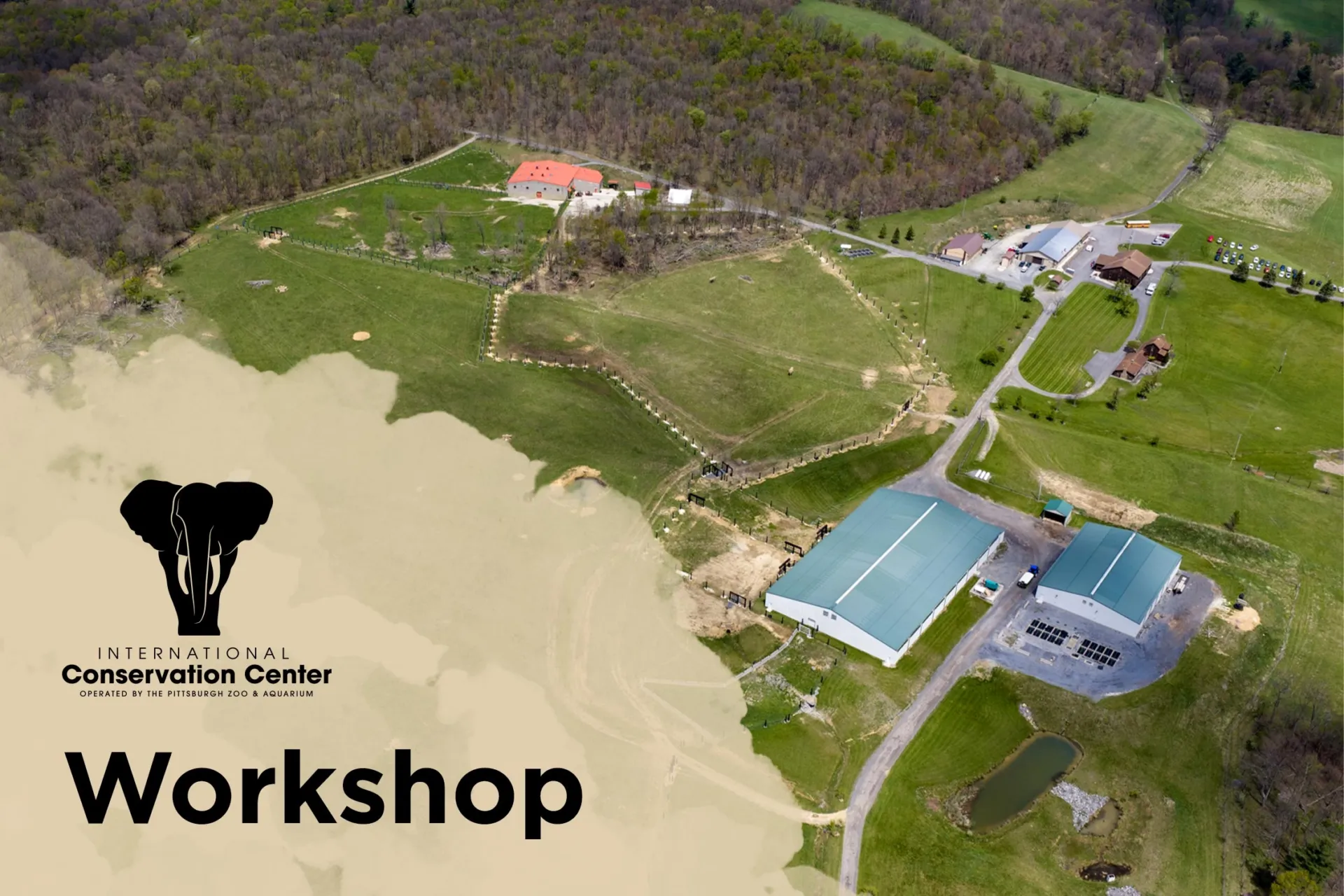
Protected Contact: Elephant & Camel Training for Dog Professionals
This multi-day workshop, Protected Contact: Elephant & Camel Training for Dog Professionals, is a professional development training specifically designed for dog behaviorists and trainers who seek to refine technical precision, ethical practice, and behavioral observation through cross-species learning.
This Protected Contact Workshop will teach participants how the techniques that we use at the International Conservation Center with elephants and camels – species that require exceptional clarity, consistency, and welfare-centered decision-making – can apply to dog training efforts. This program does not train participants to work with wildlife; participants will observe and analyze protected contact training sessions and learn how to apply the Conservation Center’s training systems to professional dog training practice.
Protected contact is an empathetic approach to animal training which can be employed with a variety of species. Caretakers and animals are separated by a protective wall or fence, and all interactions take place across it. Animals are encouraged to participate in their care through positive reinforcement involving food rewards, praise, or enrichment. Workshop participants will be led in observation, analysis, and structured planning exercises by wildlife training professionals, and will learn protected contact positive reinforcement methods, prioritizing safety and animal welfare at all times.
Please Note: Continuing Education Units (CEUs) are available for Certification Council for Professional Dog Trainers (CCPDT®), International Association of Animal Behavior Consultants (IAABC), and Karen Pryor Academy (KPA) trainers with this link.
Day 1 – Foundations of Protected Contact
8:00 a.m. – Arrival & Registration (Light Breakfast Provided)
Participants arrive at Conservation Center, complete check-in, receive program materials, and settle in.
9:00 a.m. – Welcome, Safety Briefing & Facility Orientation
Conservation Center staff provide an overview of the property, daily logistics, and expectations for observation-based learning. Informal introductions allow participants to connect with fellow professionals. A mandatory safety session covering protected contact principles, animal welfare protocols, and participant responsibilities.
10:00 a.m. – Morning Elephant Care Routine Observation: Core Behaviors
Participants observe a live protected contact elephant care session focusing on foundational behaviors, including:
- Targeting for positioning and movement
- Stationing behaviors
- Introduction to cooperative care foundations
Observation emphasizes:
- Trainer body language and spatial awareness
- Marker timing and reinforcement clarity
- How elephants are invited—not compelled—to participate
12:00 p.m. – Introduction to Protected Contact Training Systems
Classroom-style discussion breaking down:
- What “protected contact” truly means in practice
- How training plans replace physical control
- Transferable concepts for dogs with fear, reactivity, or handling sensitivities
1:00 p.m. – Lunch
2:00 p.m. – What Every Training Plan Must Include
An in-depth framework session covering:
- Clear behavioral goals and success criteria
- Step-by-step shaping plans
- Reinforcement selection and delivery strategies
- Trainer positioning and environmental setup
- Session length, pacing, and exit strategies
Participants are encouraged to compare these requirements to their current canine training plans.
3:30 p.m. – Break
4:00 p.m. – Collaborative Training Plan Development (Small Groups)
Participants are divided into small working groups:
- Each group is assigned one elephant and two Conservation Center trainers
- Groups select a new behavior not currently being trained
- Participants collaborate with Conservation Center trainers to develop a 5 session training plan:
- Define criteria
- Anticipate challenges
- Design reinforcement and session flow
This exercise highlights how precision and planning protect both animal and trainer.
6:00 p.m. – Break
6:30 p.m. – Dinner
7:30 p.m. – Panel Discussion: “What Elephant Training Teaches Us About Precision and Consent”
Conservation Center trainers and facilitators discuss:
- How a lack of precision can lead to mistakes that matter at large scale
- How animals communicate stress, confusion, or refusal
- Why consent-based work is essential—not optional—across species
Participant Q&A encouraged.
Day 2 – Bactrian Camels & Complex Decision-Making
8:00 a.m. – Breakfast
9:00 a.m. – Bactrian Camel Behavior, Motivation & Learning Styles
Classroom overview of Bactrian camels:
- Bactrian Camel Behavior
- Species-specific motivators and stress signals
- Differences in learning style compared to elephants and dogs
- The role of history, predictability, and environment
10:30 a.m. – Elephant Training Session #1
11:30 a.m. – Camel Training Observation: Protected vs. Non-Protected Contact
Participants observe camel training setups and discuss:
- Behavioral differences between protected and non-protected systems
- Risk assessment and trainer decision-making
- How choice and proximity impact behavior outcomes
12:30 p.m. – Comparative Behavior Discussion: Camels vs. Elephants
Facilitated discussion exploring:
- Species differences in response to pressure
- What behavior variability teaches us about assumptions in training
- Parallels to breed differences and individual dogs
1:00 p.m. – Lunch
2:00 p.m. – Elephant Training Session #2
3:30 p.m. – Break
4:00 p.m. – Applied Training as it Translates to Dogs
- Building shaping plans for complex behaviors
- Reinforcement sequencing and fading
- Translating protected contact strategies to:
- Fear-based canine behaviors
- Reactivity and threshold management
- Aggression cases requiring strict safety protocols
6:00 p.m. – Break
6:30 p.m. – Dinner
7:30 p.m. – Panel Discussion: “Lessons from Elephant & Camel Training”
Discussion centers on:
- Ethical decision-making under pressure
- When not to train
- Trainer responsibility during uncertainty
Day 3 – Translating Protected Contact to Dog Training
8:00 a.m. – Breakfast
9:00 a.m. – Advanced Elephant Cooperative Care Observation
Participants observe advanced husbandry and cooperative care behaviors, such as:
- Voluntary body positioning in a chute
- Handling tolerance without restraint, e.g., foot care, blood draw
- Clear opt-in and opt-out moments
Key learning focus: recognizing subtle stress and consent signals.
10:00 a.m. – Elephant Training Session #3
11:30 a.m. – Classroom Session: Ethics & Observation Skills
Deep dive into:
- Reading early stress indicators
- Differentiating non-compliance from confusion
- Knowing when to end a session
- The ethical responsibility of the trainer – not the animal
1:00 p.m. – Lunch
2:00 p.m. – Elephant Training Session #4
3:30 p.m. – Applied Discussion: Protected Contact Principles for Dogs
Facilitated application to:
- Shelter and rescue environments
- Aggression and bite-risk cases
- Veterinary handling and cooperative care preparation
- Owner education and expectation management
6:00 p.m. – Break
6:30 p.m. – Dinner
7:30 p.m. – Panel Discussion: “Applied Solutions: Participant-Proposed Challenges”
Participants present real-world canine cases and receive guided feedback using principles observed during elephant and camel training.
Day 4 – Integration & Professional Application
8:00 a.m. – Breakfast
9:00 a.m. – Elephant Training Session #5
10:30 a.m. – Group Reflections: Lessons from Elephant Training
Participants share insights gained from their assigned elephant planning exercise and observations.
11:30 a.m. – Final Discussion: Applying These Systems to Dog Training
Wrap-up covering:
- Systems thinking in training
- Ethical clarity and professional integrity
- How to implement protected-contact principles immediately in canine work
1:00 p.m. – Lunch & Program Conclusion
Final networking, certificate distribution, and departure.
Protected Contact: Elephant & Camel Training for Dog Professionals offers an exceptional opportunity to learn from training systems where precision, consent, and welfare are mandatory – not optional. Observing Conservation Center’s protected contact elephant and camel programs strengthens professional dog training practice by reinforcing clear communication, ethical decision-making, and skillful reinforcement strategies.
- Participant+Overnight $1,995
- All International Conservation Center-led instruction.
- Observation of elephant and Bactrian camel training.
- Three nights overnight accommodation including an overnight on the 14th.
- All meals from breakfast Day 1 through lunch Day 4.
- On-site transportation as required.
- Certificate of completion.
- Participant $1,895
- All International Conservation Center-led instruction.
- Observation of elephant and Bactrian camel training.
- All meals from breakfast Day 1 through lunch Day 4.
- On-site transportation as required.
- Certificate of completion.
The registration fee includes the use of one bed/bunk in a cabin that sleeps up to 8 individuals. Sleeping arrangements include four bunk beds for a total of 8 twin beds with plush 15” mattresses, electric lights, and access to electrical outlets. Attendees must provide their own linens, personal items and anything else they might need for their stay. See the photos below for a closer look at the cabin accommodations.
Amenities include:
- Bathrooms and showers
- Covered open-air pavilion with picnic tables
- Enclosed kitchen
Please note the registration includes one bed and not the entire cabin.
- Professional dog trainers
- Certified behavior consultants
- Shelter and rescue training professionals
- Veterinary behavior teams
- Trainers seeking advanced ethical and technical refinement
Save $100 by booking before 7/1/26! Discount automatically applied at checkout.
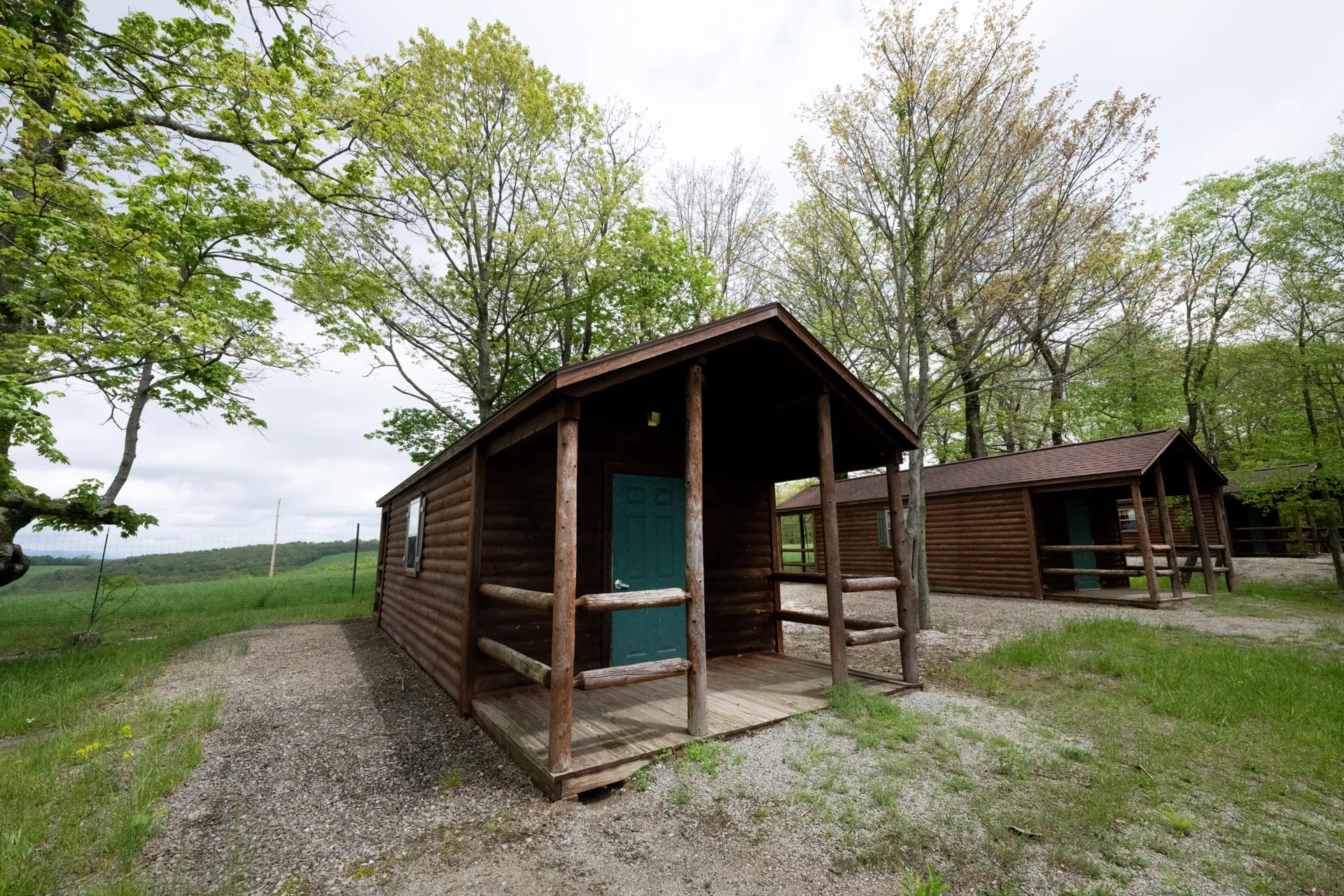
Click through these photos for a closer look at the cabin accommodations.